Essential Features of a Next.js SaaS Boilerplate
Essential Features of a Next.js SaaS Boilerplate
Creating a Software as a Service (SaaS) product can be a challenging endeavor that involves multiple tech stacks, methodologies, and patterns. To streamline the development process, many teams choose to utilize boilerplates that provide a foundational structure. Next.js, as a React framework, has gained popularity for building modern web applications. In this blog post, we will explore the essential features that a Next.js SaaS boilerplate should have to support scalable, maintainable, and user-friendly applications.
1. Authentication and Authorization
One of the core functionalities of any SaaS application is user authentication and authorization. A solid boilerplate should include:
- User Registration: Allow new users to create accounts using email, social logins (Google, Facebook, etc.), and possibly other authentication methods like two-factor authentication (2FA).
- Session Management: Use cookies or local storage to persist user sessions securely.
- Role-Based Access Control: Grant different permissions to users based on their roles, such as admin, member, and guest.
Implementing authentication not only secures your application but also enhances user experience by allowing personalized interactions.
2. Responsive Design
Today’s users access applications across various devices, ranging from desktops to mobile phones. A well-structured Next.js SaaS boilerplate should include:
- Mobile-First Approach: Use CSS frameworks (e.g., Tailwind CSS, Bootstrap) or media queries to ensure the UI is responsive on all devices.
- Accessibility Standards: Follow the Web Content Accessibility Guidelines (WCAG) to cater to users with disabilities.
By integrating responsive design from the get-go, you can enhance user experience and accessibility.
3. API Integration
Most SaaS applications rely on backend services for data management. The boilerplate should have features for:
- RESTful API Support: Facilitate communication between the frontend and backend using RESTful APIs.
- GraphQL Support: Some applications prefer GraphQL since it enables clients to request only the data they need.
- Error Handling: Implement error handling for API calls for better debugging and a user-friendly experience.
Make sure that all API calls are secure, well-documented, and dynamically managed.
4. State Management
Efficient state management is crucial for complex applications. A SaaS boilerplate should consider:
- State Management Libraries: Integrating libraries like Redux, MobX, or Zustand helps manage the application state more effectively.
- Server State Management: Use libraries like React Query or SWR for managing server-side state, fetching data, and caching it effectively.
By effectively managing state, you can improve performance and user experience.
5. Environment Configuration
Good development and production practices require separate configurations. A boilerplate should:
- Environment Variables: Support multiple environment configurations (development, staging, production) using
.envfiles or environment variables. - Build Configurations: Ensure easy access to configuration settings, including API endpoints, feature flags, and logging levels.
Making environment management seamless helps in deploying changes without breaking the application.
6. Database Integration
While the choice of database may vary based on specific requirements, a boilerplate should provide:
- Database Connector: Include methods to easily connect to a relational (PostgreSQL, MySQL) or a NoSQL database (MongoDB).
- ORM (Object-Relational Mapping): Use an ORM like Prisma or Sequelize to simplify database interactions, migrations, and schema definition.
Database integration is essential for storing user data and application state, so a boilerplate should facilitate this effortlessly.
7. Performance Optimization
Performance can significantly impact user satisfaction. Essential features for optimization include:
- Code Splitting and Lazy Loading: Implement these techniques to ensure that users download only the necessary scripts, especially for large applications.
- Static Site Generation (SSG) & Server-Side Rendering (SSR): Take advantage of Next.js features to optimize load times and enhance SEO.
- Image Optimization: Use Next.js's built-in image component to automatically optimize images.
By integrating these performance strategies from the start, you can build an application that responds quickly and efficiently.
8. Testing Framework
Quality assurance is vital for maintaining the integrity of your application. The boilerplate should include:
- Unit Testing: Utilize testing libraries like Jest or Mocha for unit testing components and functions.
- End-to-End Testing: Frameworks like Cypress or Playwright can help create comprehensive tests that mimic user interactions.
- Continuous Integration/Continuous Deployment (CI/CD): Setup scripts to automate testing, building, and deploying your application.
Establishing a robust testing strategy enhances code quality and reliability.
9. Internationalization (i18n)
A SaaS application may cater to a global audience, requiring support for multiple languages. The boilerplate should:
- Localization Support: Provide a way to manage translation files and switch between languages easily.
- Format Dates, Currencies, and Other Localized Content: Ensure content is appropriately formatted based on user preferences.
Adding internationalization upfront can help you reach a more extensive customer base.
10. Monitoring and Analytics
Tracking user interactions and application performance can drive data-informed decisions. Key features to include are:
- Error Tracking: Use services like Sentry or LogRocket to capture and analyze errors in real-time.
- Analytics Integration: Connect to platforms like Google Analytics or Amplitude for insights into user behavior and application usage.
Monitoring and analytics inform you about potential issues and help to optimize the user experience based on data.
Conclusion
Starting a SaaS project with a well-structured boilerplate can save time and effort while providing a solid foundation for further development. By including essential features such as authentication, responsive design, state management, and performance optimization, you are setting your project up for success. Remember that the right features will not only enhance the functionality of your application but also ensure a smoother development process and an enjoyable end-user experience. Happy coding!
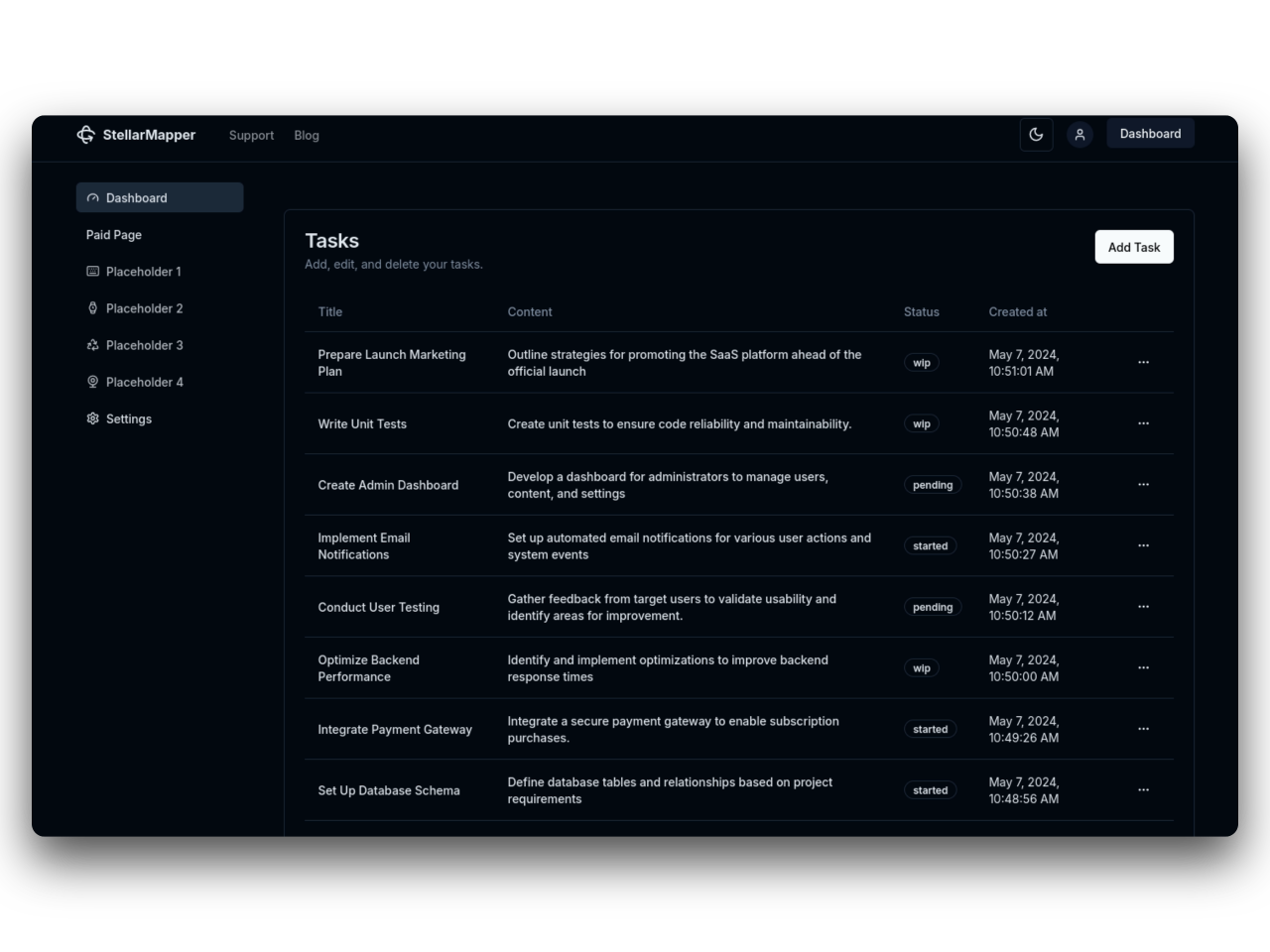
31SaaS
NextJs 14 boilerplate to build sleek and modern SaaS.
Bring your vision to life quickly and efficiently.